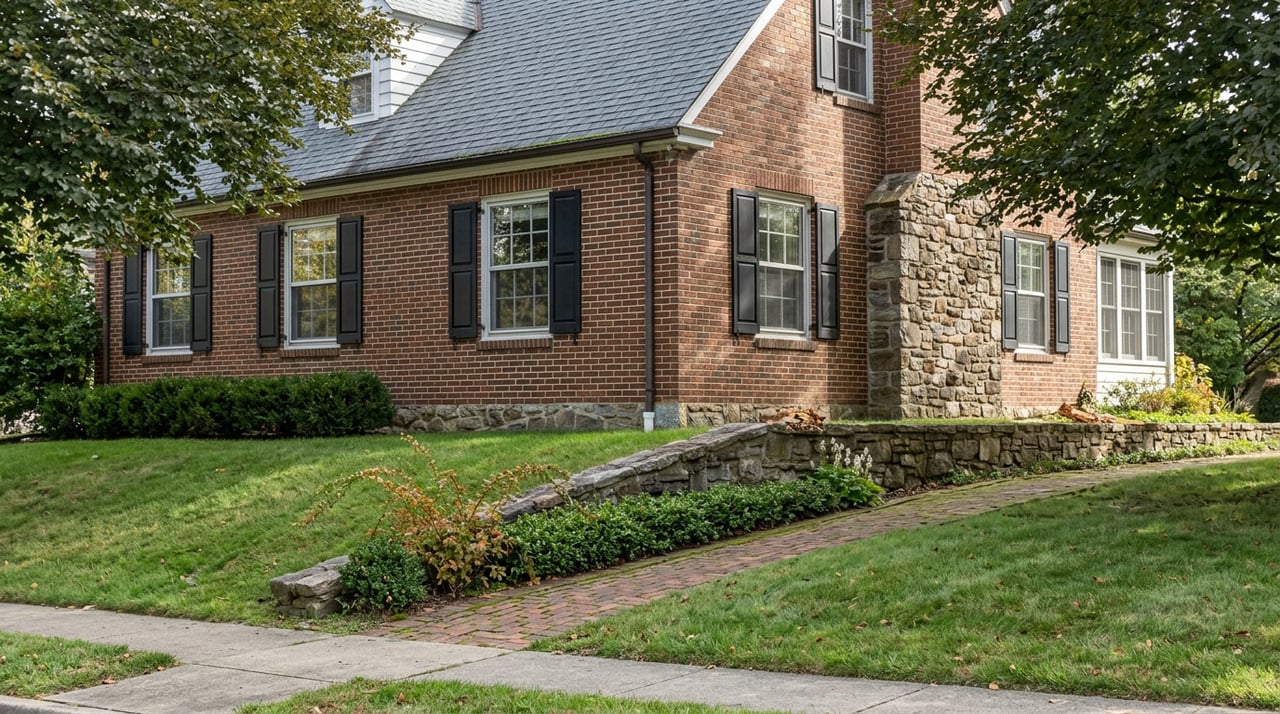
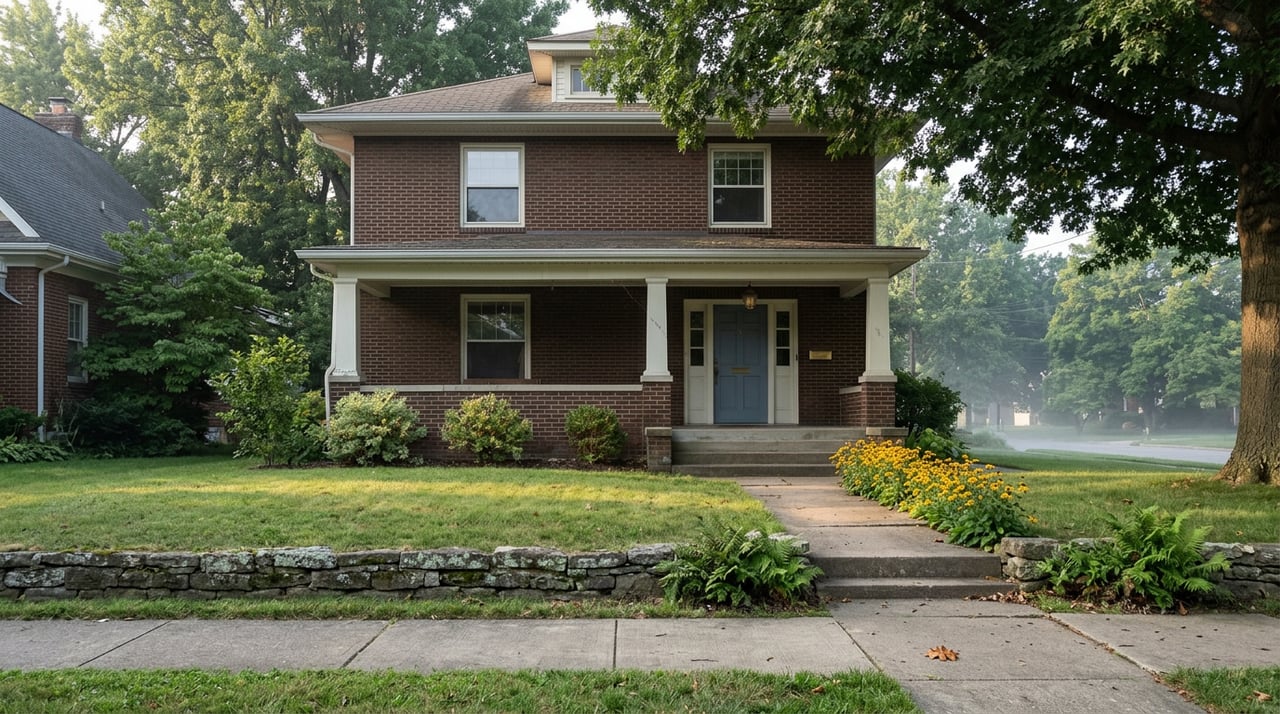
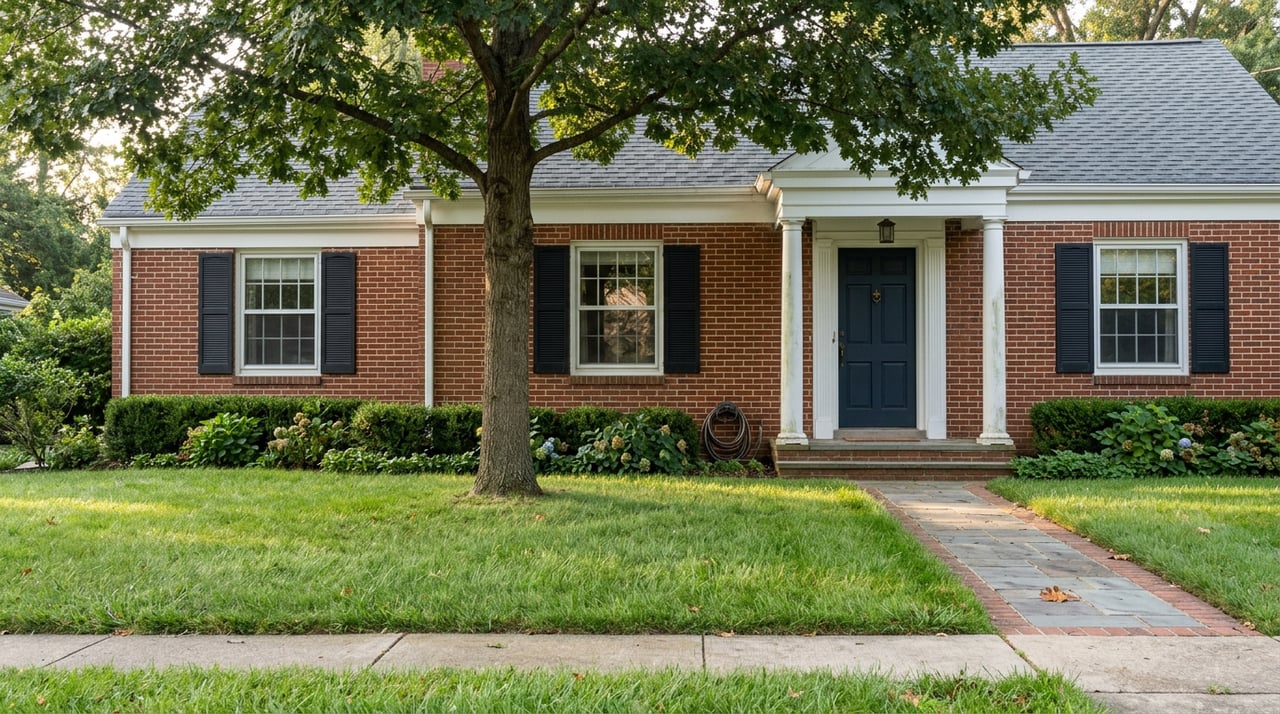
Drive up 16th Street into Shepherd Park and the street signs start doing something unusual. Juniper. Hemlock. Locust. The neighborhood takes its name from Alexander "Boss" Shepherd, the former D.C. territorial governor who chose this stretch of land as the site of his summer home, and even after that mansion came down in the early 1900s, the streets kept their garden vocabulary. It is a neighborhood platted to feel like a retreat, not a destination. There was never a Main Street here, no commercial spine like Barracks Row or Connecticut Avenue, just quiet blocks of Colonial revival and mid-century modern houses under a canopy of trees.
So where do you actually end up on a Saturday? If you have lived here more than a few years, you already know the honest answer is not on your own block. It is somewhere just outside the boundary you'd draw on a map, and the reason for that says more about how this neighborhood actually functions than any listing of amenities ever could.
A Neighborhood Built to Turn Inward
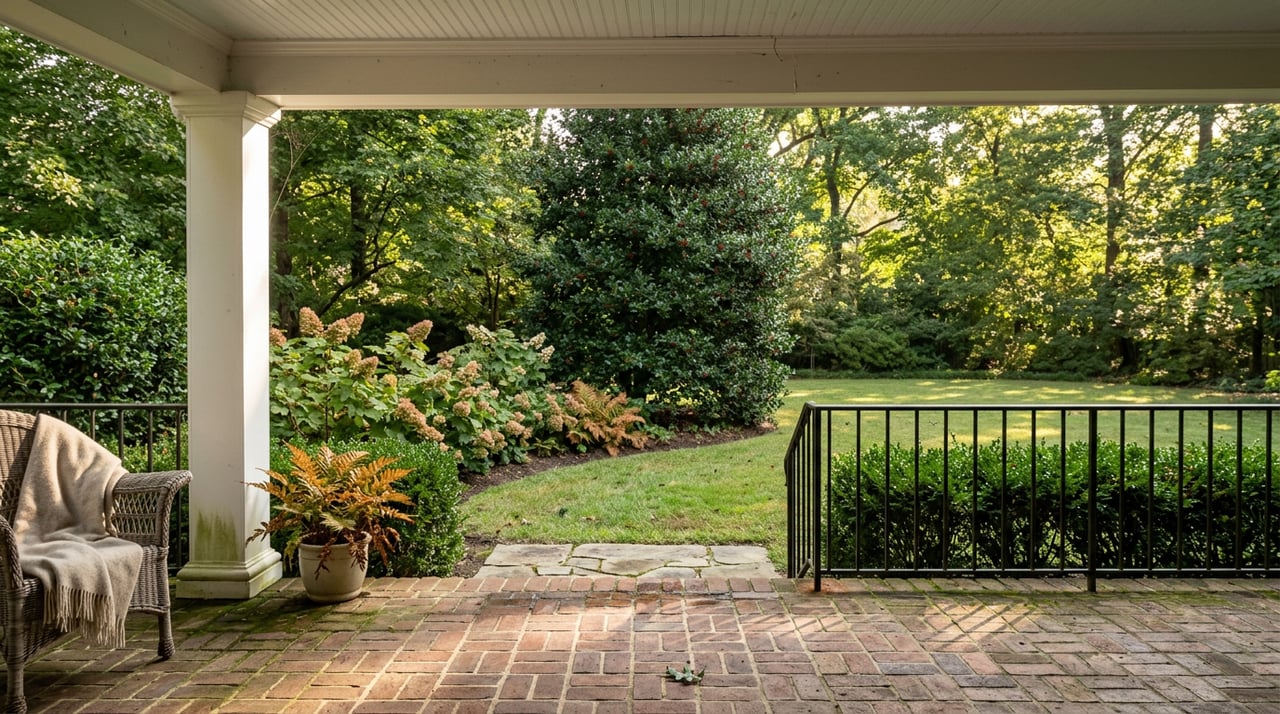
Shepherd Park's housing stock still tells the story of a place designed for privacy over gathering. Deep front lawns. Wooded side streets. No corner storefronts baked into the original plan. That was fine for decades, because a resident who wanted a grocery run, a coffee, or a Saturday errand loop had to cross into Silver Spring or drive down to Takoma. The neighborhood itself was residential in the purest sense: a place to come home to, not a place to linger.
That worked until the fence came down.
What Used to Sit Behind a Fence
For most of Shepherd Park's history, its eastern edge butted up against the Walter Reed Army Medical Center, a working military campus closed to the public. When the Army closed the campus in 2011, that boundary stopped meaning anything. What replaced it, a 66-acre mixed-use redevelopment now called The Parks at Walter Reed, did something the original neighborhood plan never did: it built a center.
The turning point was the Marketplace Plaza, which opened in 2023 anchored by a Whole Foods Market. At the ribbon-cutting, Mayor Muriel Bowser described the project as "closing amenity gaps, giving more residents walkable access to a grocery store", which undersells what actually happened. The Plaza didn't just add a grocery store. It gave a neighborhood with no historic commercial corridor its first one, and three years later, that plaza has become the busiest common ground for blocks in any direction, sitting just outside the line most residents would draw around Shepherd Park itself.
The tenant roster now reads like the retail strip Shepherd Park never had:
- Whole Foods Market, the commercial anchor
- JINYA Ramen Bar, the campus's first sit-down restaurant
- The Charmery Ice Cream Shop and Mezeh Mediterranean
- Nailsaloon and Chase Bank
- District Dogs and Livewell Animal Hospital
- Juneberry Garage and Starbucks
None of that existed a decade ago. All of it sits closer to most Shepherd Park front doors than downtown Silver Spring ever was.
The Calendar on the Plaza
A grocery store and a ramen counter explain the errands. They don't explain why people linger. That part comes from programming that has grown up around the Plaza's public space, which includes a splash pad that gets converted into an ice rink for winter, along with outdoor games and casual seating built directly into the design.
The Plaza runs a Sunday DJ series produced with local promoter Nü Androids, the kind of low-key weekend soundtrack that turns an errand into an afternoon. A few hundred feet away, the Great Lawn, a six-acre protected greenspace at the center of the old campus, hosts Jazz in The Parks each summer along with occasional five-dollar yoga sessions. None of this is loud or ticketed. It's the kind of programming built for people who already live nearby and want a reason to walk over rather than drive somewhere else.
Where the Citizens Association Actually Meets Now
Here is the detail that settles the question. The Shepherd Park Citizens Association, the group whose entire purpose is representing this specific neighborhood, still runs the traditions you'd expect from a close-knit community: an annual picnic, a yard sale, a potluck dinner, and a garden tour, according to the SPCA's own site. Those all happen on Shepherd Park's own streets.
But the association's highest-profile annual event doesn't. The SPCA's Halloween tradition, now called the Spet-tacular Halloween Parade and Costume Contest, takes place at the dog park at The Parks at Walter Reed, not inside Shepherd Park's own boundary. A neighborhood association built to serve one specific place chose to hold its biggest gathering somewhere else, because that is where the space to hold it now exists.
| SPCA Tradition | Where It Happens |
|---|---|
| Picnic, yard sale, potluck, garden tour | Within Shepherd Park |
| Spet-tacular Halloween Parade | Dog park, The Parks at Walter Reed |
That's not a criticism of the association. It's a map of where the neighborhood's social infrastructure actually lives now, drawn by the people with the most reason to know.
The Other Anchor Runs West, Not East
If the Plaza is where Shepherd Park goes to gather, the Holly Trail is where it goes to disappear for an hour. The trailhead sits at 16th and Holly Street, on the neighborhood's western edge, and it began life as a bridle trail that likely predates Rock Creek Park itself, according to trail documentation from the Hiking Project. It's a short, unglamorous connector, prone to ruts in wet weather, but it does exactly what a neighborhood trail should: it gets you into the woods fast.
Follow it far enough and you'll hit the Pine Trail, a 0.28-mile connector that the National Park Service traces back to a farm road first mapped around 1850, decades before the park existed at all. It's easy to forget that Shepherd Park backs directly onto one of the oldest urban national parks in the country. The trail doesn't ask anything of you. No parking fee, no reservation, just tulip poplars and white oaks and a five-foot dirt path that's been there, in some form, longer than the neighborhood has had a name.
So Which Way Do You Walk on Saturday
The honest map of Shepherd Park life runs on two edges and empties out in the middle. West, toward Rock Creek Park, for the people who want quiet and canopy. East, toward the Marketplace Plaza, for the people who want a grocery run, a bowl of ramen, or a Sunday afternoon with music playing. The platted streets in between, the ones named after garden plants, still do exactly what they were built to do: they're for coming home to, not for gathering on.
One piece of neighborhood life has stayed inside the original boundary the whole time. The Shepherd Park/Juanita E. Thornton Library on Georgia Avenue still runs its own summer programming for families, a small but genuine anchor that never needed a redeveloped campus to exist. It's proof the neighborhood didn't lose its center entirely. It just stopped being the only one.
None of this changes what makes Shepherd Park worth living in. If anything, it explains why residents who've been here a while rarely complain about the lack of a commercial strip on their own streets. They found one close enough to use and far enough to still come home to something quiet.
If you're weighing a move into Shepherd Park, or already live here and are curious what your street's specific character means for resale, staging, or timing, Matthew Paschall has spent two decades reading blocks like this one. Let's Connect.