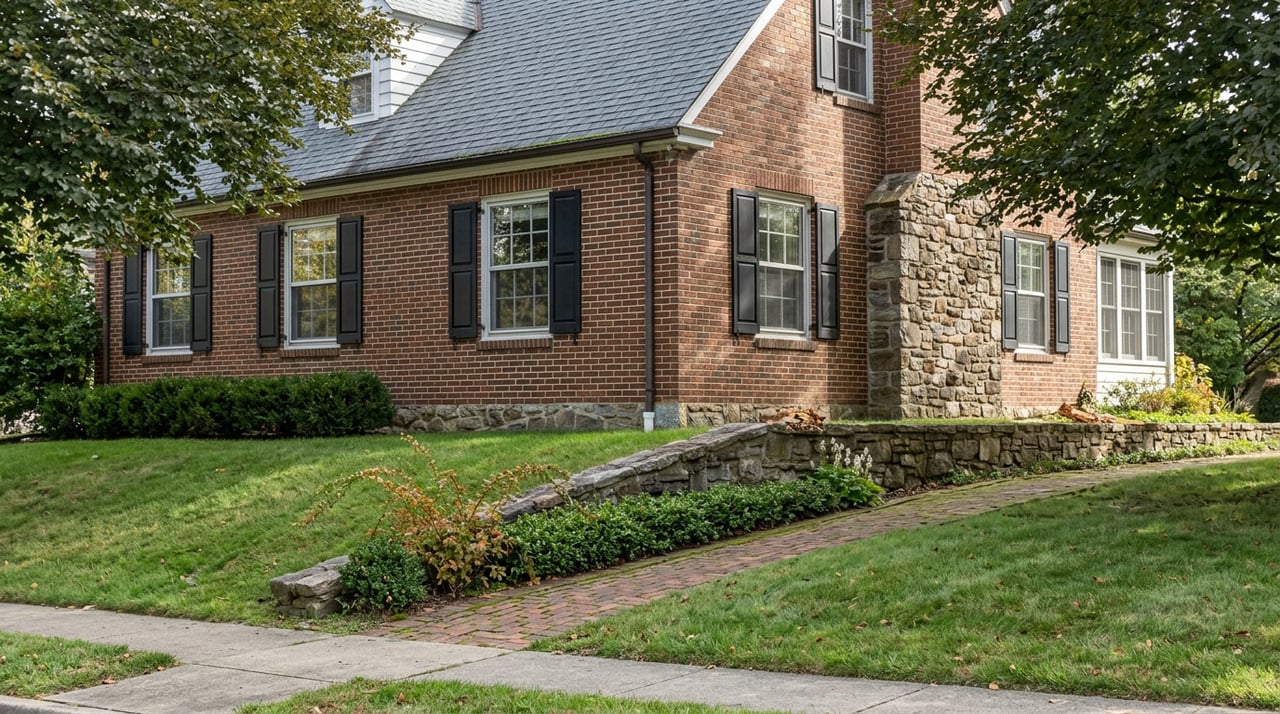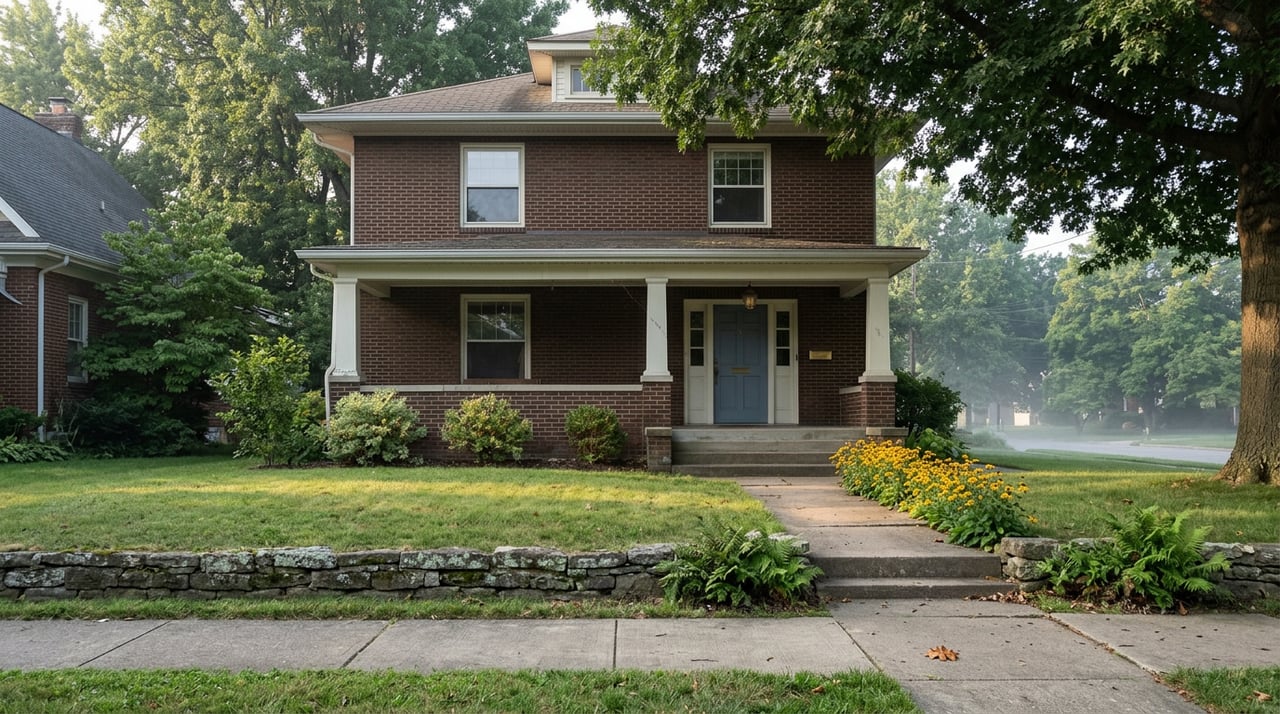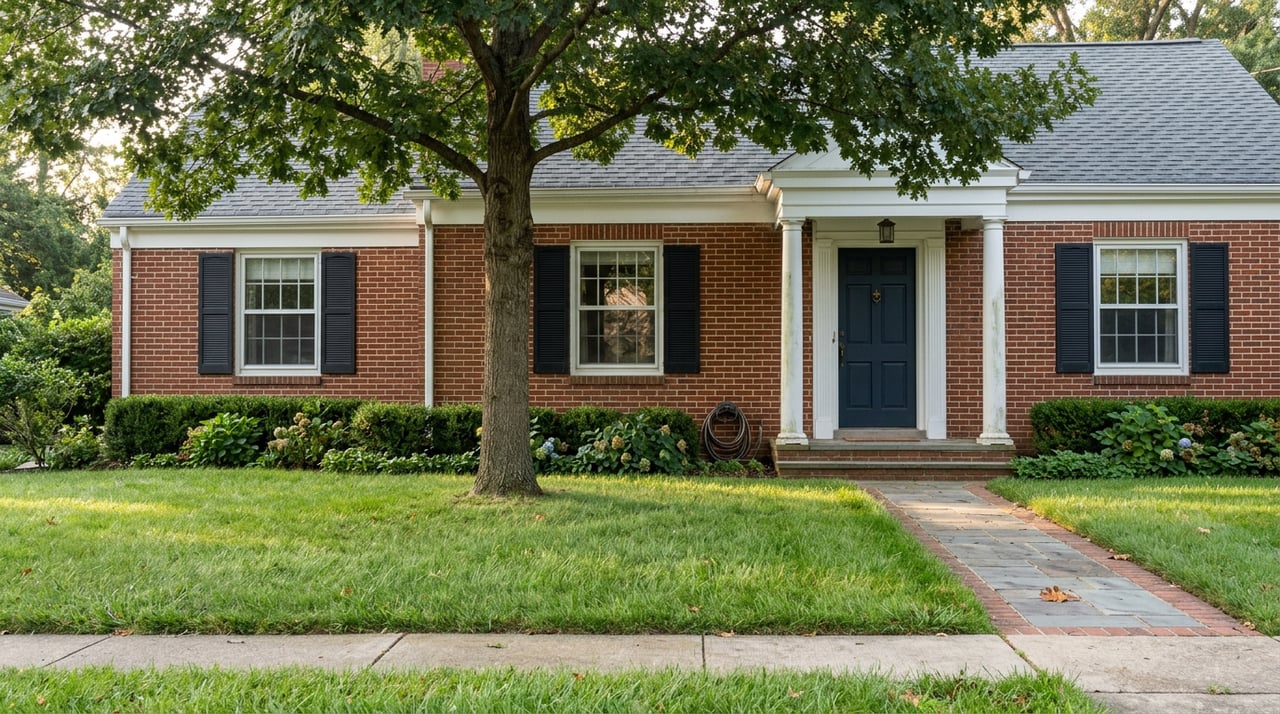
If you are shopping Alexandria this summer, the first useful thing to know has nothing to do with price. In a city where most of the walkable inventory predates 1950, the pre-offer inspection has quietly become the standard tool for buyers who want to compete on a clean contract without agreeing to buy blind. A roughly $600 walkthrough before you write the offer preserves the negotiating information a waived contingency would otherwise cost you, and in Old Town and Del Ray the usual findings, aging galvanized supply lines, undisclosed prior renovation work, party-wall moisture at shared brick, are common enough to make that fee the cheapest line item in the transaction.
Hold that fact in one hand. In the other, hold the headline: Alexandria's citywide average sale price rose 1.1% year over year in June 2026. That number is the reason many buyers are convinced they missed the window. It is also misleading in a specific, measurable way, and unpacking it is where a serious buyer finds room to work.
The mix-shift trick behind the June headline
Every individual property segment in Alexandria softened in June 2026. The citywide average rose anyway. Both statements are true because the composition of what closed shifted toward higher-priced detached homes, and detached carries the highest average of any property type. Fewer condo transactions in the mix pull the aggregate up even when each segment is flat or falling. The median is a signal about which shelves are moving, not about which shelves are appreciating.
The regional picture confirms that framing. NVAR's June 2026 report recorded 1,919 closed sales across Northern Virginia, up 3.9% year over year, with a regional median of $810,000 and average days on market of 19. Months of supply sat at 1.98, still well under a balanced market. Underneath that momentum, though, the three Alexandria segments are moving in three different directions, and it is the segment mechanics, not the aggregate, that decide where a buyer has leverage.
Three markets, three mechanisms
Detached: thin shelf, disciplined pricing
The 2026 NVAR and George Mason mid-year forecast, released June 25, projects Alexandria detached inventory to contract another 9.1% this year, with unit sales easing 6.0% and prices still rising 1.1%. Fewer houses are reaching the market. Fewer are trading. Prices are holding.
The mechanism is the mortgage lock-in effect. The Federal Housing Finance Agency has estimated that low-rate mortgages held by existing owners cut national home sales by roughly 1.7 million between 2022 and 2024, with about half of U.S. homeowners still carrying notes below 4%. In a city where the typical detached seller is trading up rather than exiting, that math keeps the best stock off the MLS. What reaches the market in Rosemont, North Ridge, Beverly Hills, and the detached pockets of Del Ray tends to be prepared, and it tends to sell quickly if it is. What sits, sits on condition, not on demand.
Leverage for the detached buyer is minimal on prepared homes and meaningful on unprepared ones. A well-timed second look at a listing that has been on the market thirty days is often worth more than an aggressive first offer on a listing that just launched.
The attached middle: preparation earns the discount
Alexandria townhomes are projected to rise 2.3% in price in 2026, with sales up 2.3% and inventory essentially flat. This is the segment where staging, disclosures, and inspection findings do the real negotiating. Buyers here are usually households trading up from a condo who have watched their equity plateau and decided they would rather own the walls than pay them. They are pre-qualified, they have seen what $700,000 buys in Old Town versus what it buys in Cameron Station or the West End, and they are unwilling to overpay for a home that has deferred a major system.
If you are shopping the attached middle, the pre-offer inspection is the lever. It lets you write a contract that competes on terms while pricing your offer against a repair list the seller has not seen.
Condo: where the price flexibility lives
This is the segment most buyers misread. Alexandria condo average price in June 2026 came in at $468,466, down 6.2% year over year, the largest drop of any segment. In the same mid-year forecast, NVAR and GMU project condo unit sales to jump 15.6% in 2026 on a 31% surge in condo inventory.
Two things are happening at once. Supply is opening up. Demand is meeting it. Prices are still under pressure. The mechanism is not neighborhood weakness. It is the monthly fee. A buyer who can absorb a $700 to $900 condominium fee is walking into a segment where sellers are pricing to move because they are competing against every other unit in the building and, in some corridors, every other unit within a quarter mile.
Reading the Virginia Property Owners' Association Act and the condo instruments before you offer matters more here than in any other segment. The resale certificate, the reserve study, and the assessment history determine whether a fee is a stable line item or a warning. Older Old Town and Old Town North buildings occasionally carry deferred façade or elevator work that a reserve study will show plainly if you ask for it.
What the regional voices are actually saying
Bright MLS chief economist Lisa Sturtevant, quoted in the June regional summary, characterized the mid-Atlantic as a market driven by higher-end sales, with higher-income and repeat buyers most active while first-time buyers stay sidelined. In Alexandria that pattern translates cleanly: detached homes go under contract on their strengths and sit on their weaknesses, and the entry-level condo shelf is where the price discovery is happening.
GMU's Terry Clower, in the same mid-year update, attributes the market's resilience to pent-up demand and long-term regional confidence. That view is being tested against a genuine labor-market shift. Federal employment across the Washington metropolitan area fell by roughly 64,000 jobs between December 2024 and April 2025, while the professional, scientific, and technical services sector lost more than 38,000 positions. Alexandria's price data has absorbed that pressure so far. Whether it continues to is the single variable most worth watching through year end.
How to shop each shelf
A short field guide, given the mechanics above:
- Detached in Rosemont, North Ridge, Beverly Hills, and Del Ray. Assume competition on anything prepared. Do not chase; sort by days on market descending and look at week three and week four listings first.
- Townhomes and rowhouses. Order the pre-offer inspection. Price your offer against the repair list, not against list price. Sellers here are usually reasonable when the ask is documented.
- Condos in Old Town, Old Town North, and Potomac Yard. Sort by fee, not by list price. Read the resale certificate and reserve study before you commit. This is the shelf where a patient buyer can genuinely negotiate on price and terms in mid-2026.
A few honest questions
If detached inventory is falling, why isn't Alexandria's detached price rising faster than 1.1%? Because the buyer pool has thinned at the top even as it has thickened lower down. Regional forecasts have detached appreciation in the 1.5% to 4.2% band, and Alexandria's 1.1% projection sits at the low end because the city's mix is heavier on high-price detached that is now transacting at slower velocity.
Are federal workforce reductions showing up in Alexandria prices yet? Not in the aggregate. The 64,000-job federal contraction between December 2024 and April 2025 has not broken the price trend. It has, however, coincided with softer condo pricing, which is the segment most exposed to first-time buyers and dual-income federal households.
Is this a bad time to buy an Alexandria condo? The forecast says the opposite. Rising inventory, rising sales, and softer prices are the definition of a buyer's window. The catch is the fee, which is why the resale certificate matters as much as the list price.
What about the Potomac Yard Metro and Virginia Tech Innovation Campus effect? Real but priced in on the new-construction condo stock. Where value still exists nearby is in the pre-2020 buildings whose fees are steadier and whose sellers are competing against the newer supply.
A closing note
Every Alexandria segment is telling a different story right now, and the citywide median is the least useful sentence in any of them. If you are weighing a purchase here against Arlington, close-in Fairfax, or a Northwest D.C. rowhouse, the answer is not in the average. It is in which shelf fits your household and how the mechanism on that shelf is moving.
If you would like a direct read on a specific building, block, or comparison, Matthew Paschall is happy to walk through the numbers with you in the context of your own timeline. Let's connect.